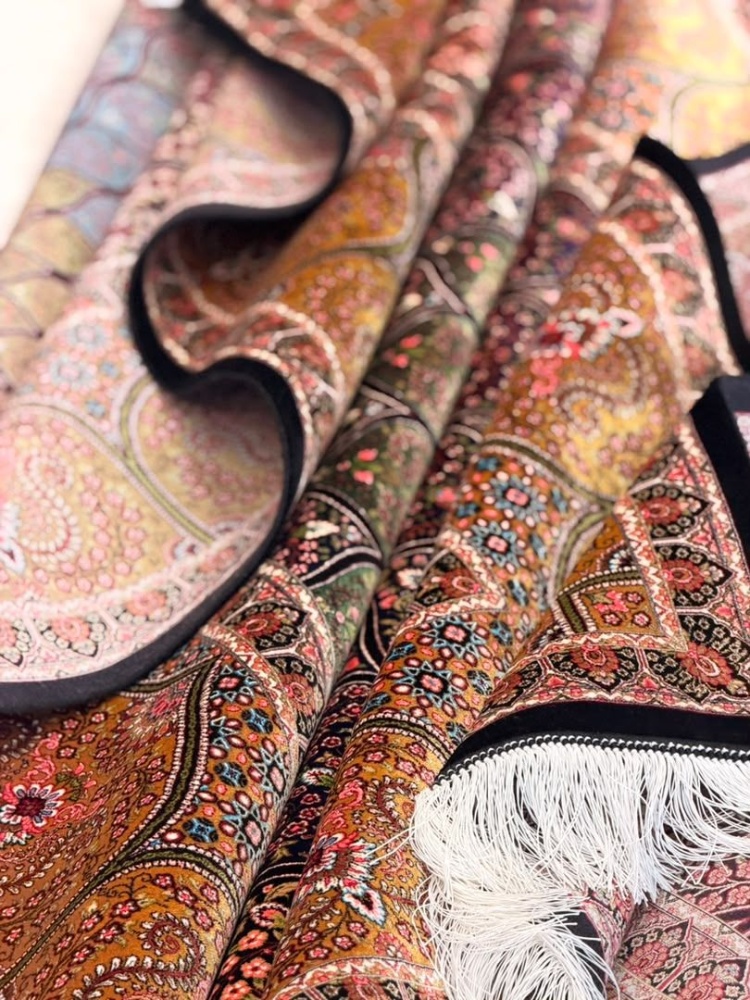
A showroom photograph can show a motif but it cannot tell a wholesale buyer how the rug lies on the floor or how firmly the edge is secured. Before approving a production run or a shipment, inspect a physical sample and record observations that someone receiving the order can repeat.
Start with the written specification
Ask for the crosswise reed rating, longitudinal density and units separately. ISO 1763 counts pile tufts or loops per unit length or area. To compare a count on the rug with a commercial loom specification, ask about construction and the manufacturer’s counting convention. Reed count alone does not establish durability.1
Obtain the generic names and proportions of the pile fibres. Acrylic, polyester, polypropylene and wool describe fibres. Viscose and lyocell are regenerated cellulosic fibres. “Silk-look” describes appearance. Check any claim of natural silk against the fibre specification. A hand-finished edge or fringe can be added to a machine-woven rug.
Record overall thickness, pile thickness above the substrate and total mass per square metre separately. Weight in kilograms divided by the measured area in square metres gives a rough check of total mass per area. Record how the fringe was treated. Pile mass alone requires a different measurement.234
Unroll the rug on a level floor
Open the full sample on a clean, level floor in indirect daylight. Allow storage creases to relax, then record persistent rippling or corners that turn up. Rolling time, room temperature and backing stiffness affect how long this takes. A small swatch lets you examine local detail; use a full-size sample to evaluate the corners.
Measure length and width at several points and record how you handled the fringe. Compare both diagonals and check the corners with a square. Assess the results against the tolerance agreed for that size and construction. EN 14159 addresses dimensional tolerances. ISO 2551 tests dimensional change under specified moisture and heat conditions.56
Sight along the main borders from a short end. On a symmetrical design compare the panel grid, medallion pendants and corner motifs with the approved pattern.
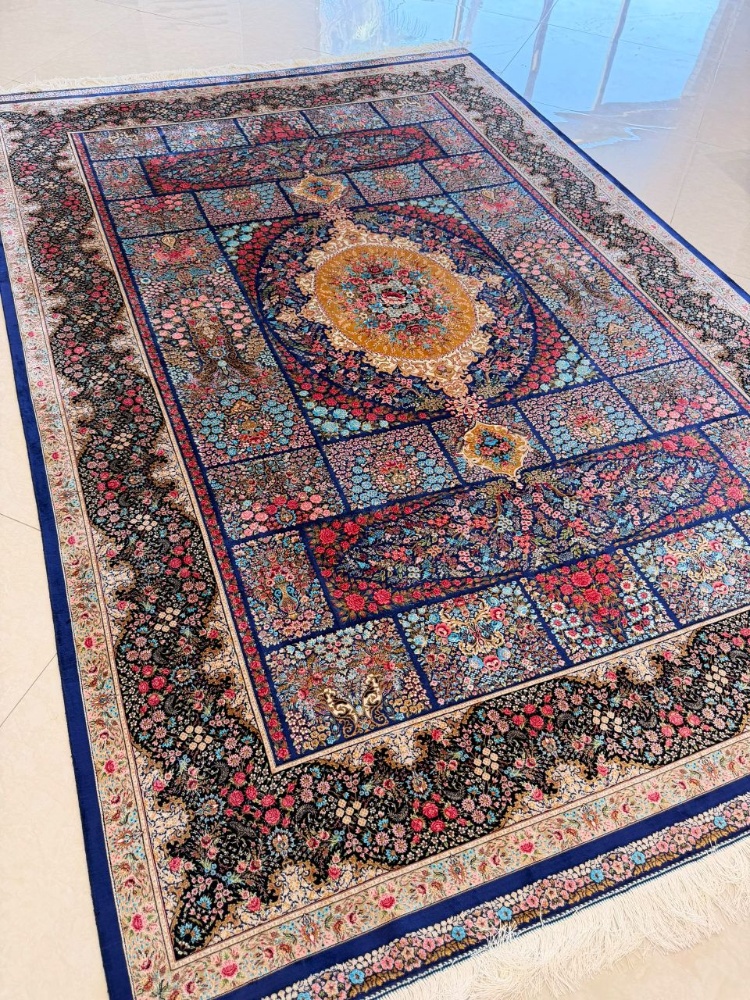
Turn the rug over and inspect the edges
Look along the rows on the reverse and across the backing finish. If the construction permits it, flex one corner gently. Record cracks, flaking or powdery residue.
Run a hand along both long sides to find skipped stitches, loose loops or puckering. Check the two short ends separately. On a fringed rug examine the attachment line, spacing and any brittle adhesive. Compare the edge colour and finish with the agreed design.
Read the pile and colour from both ends
Keep the lighting steady and view the same patch from both short ends. The direction of the pile and the angle of illumination can make the same colour look lighter or darker. Turn the sample and examine a suspected streak again.
Look at the boundary between contrasting colours and the fine lines of the medallion and border. Photograph missing tufts, a wandering line or unexpected bands across a broad field. Compare them with the approved design to distinguish intended variation.
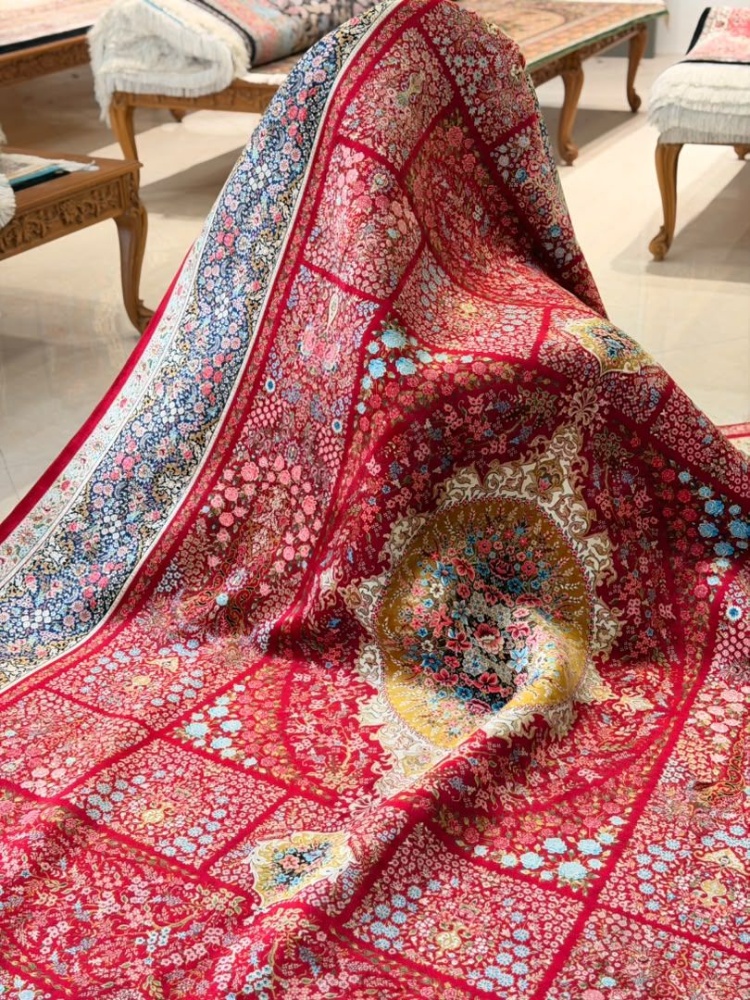
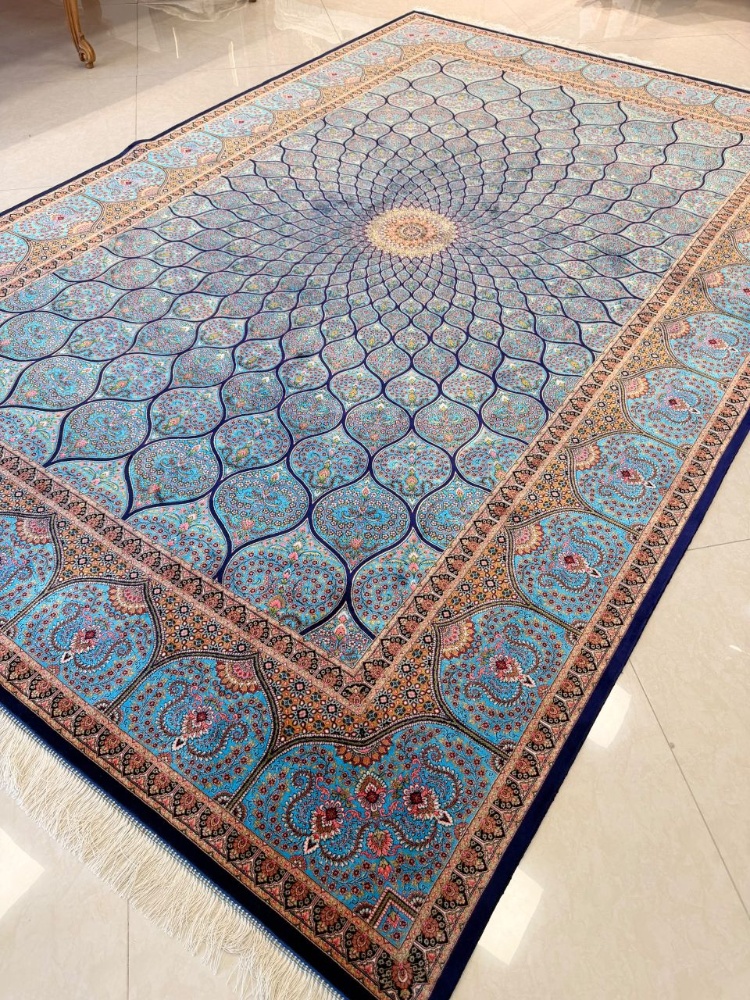
Screen for colour transfer and check the documentation
With permission, use a spare swatch or an inconspicuous area. Gently rub a dark colour with a clean white cotton cloth. If the care instructions allow, repeat with a separate slightly damp cloth. Record any transfer. For a contractual pass or fail, request the standardised dry and wet rubbing result under ISO 105-X12.7
For a sunlit interior, ask for the light-fastness result under ISO 105-B02 for the relevant material. If an OEKO-TEX STANDARD 100 certificate is offered, check its number, validity and scope. A yarn certificate covers the specified yarn. A claim about the finished rug requires coverage of the finished article.89
Record persistent odour, surface lint or tufts that come away under gentle handling. Odour and touch alone cannot establish chemical safety.
Keep a signed reference for delivery
Mark the approved rug or documented control swatch with the design code, colourway, date and specification revision. Have both parties sign it and retain photographs of the face, reverse and edges with the order.
Agree in writing on acceptable dye-lot shade variation, dimensional tolerances, rolling and transport protection before production. Compare delivered goods with the signed sample side by side in the same light.
Pre-order checklist
- Specification sheet and units recorded
- Dimensions, diagonals and corners checked
- Backing, edges, pile and colour examined
- Test results and certificate scope checked where relevant
- Reference labelled, photographed and signed by both parties
Further reading for buyers
Sources
- ISO 1763 — Counting pile tufts and loops
- ISO 1765 — Overall thickness
- ISO 1766 — Pile thickness above the substrate
- ISO 8543 — Determination of mass
- EN 14159 — Dimensional and pattern tolerances
- ISO 2551 — Dimensional changes under water and heat
- ISO 105-X12 — Colour fastness to rubbing
- ISO 105-B02 — Colour fastness to artificial light
- OEKO-TEX STANDARD 100 — Testing for harmful substances and certificate scope