Among the classic all-over repeating patterns of Iranian carpet weaving, the Mina-Khani pattern (نقش میناخانی) stands out for its open, rhythmic clarity 12. Built from round, multi-petalled blossoms linked by an intersecting diamond or circular vine lattice, Mina-Khani brings a cheerful, architectural order to the carpet field 123. While it shares the repeating-grid logic of other Persian field designs, its open floral geometry makes it unmistakably distinct once you know its core repeat unit 12.
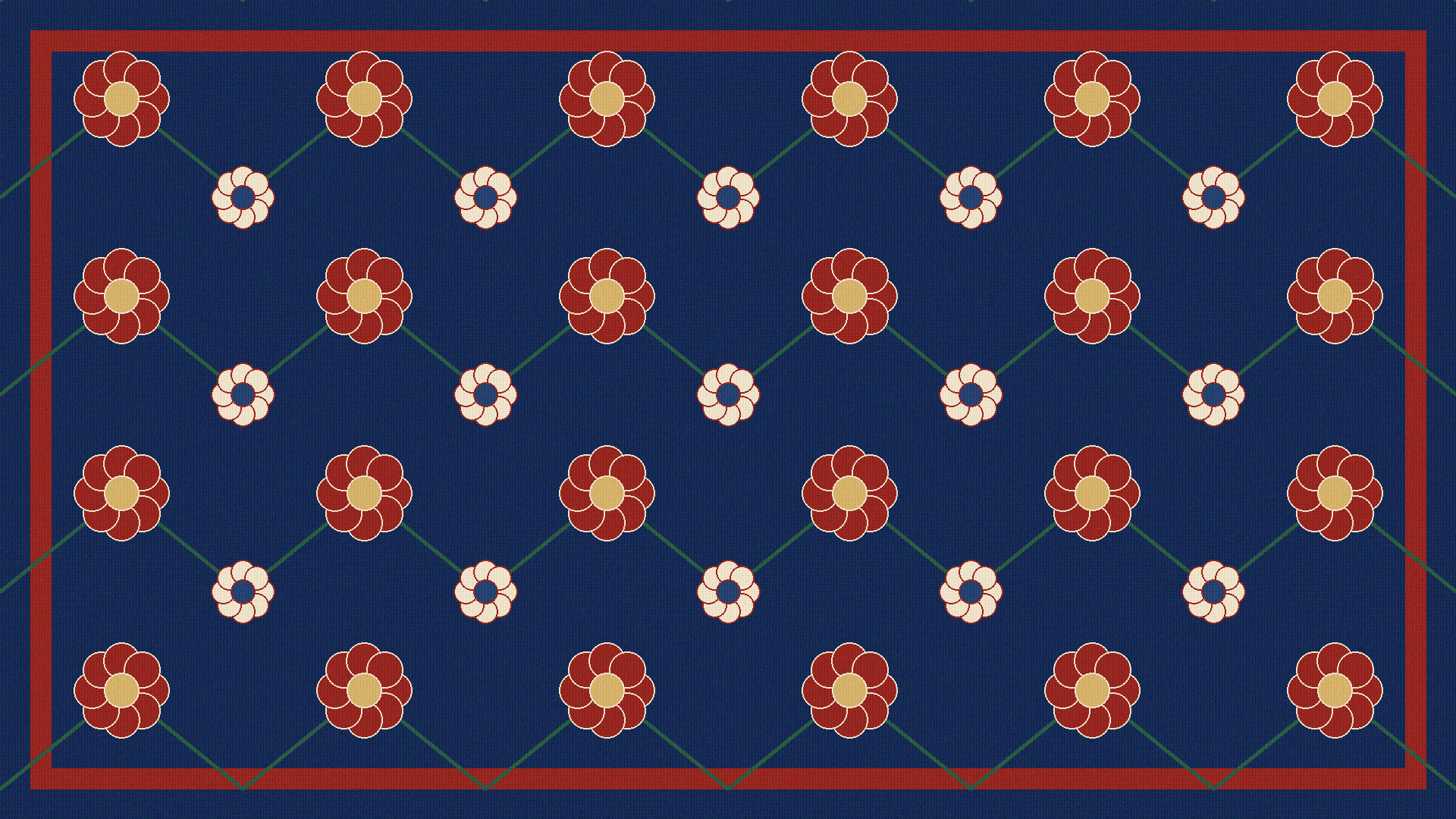
Structure of the Repeat: Large and Small Flowers Joined by a Lattice
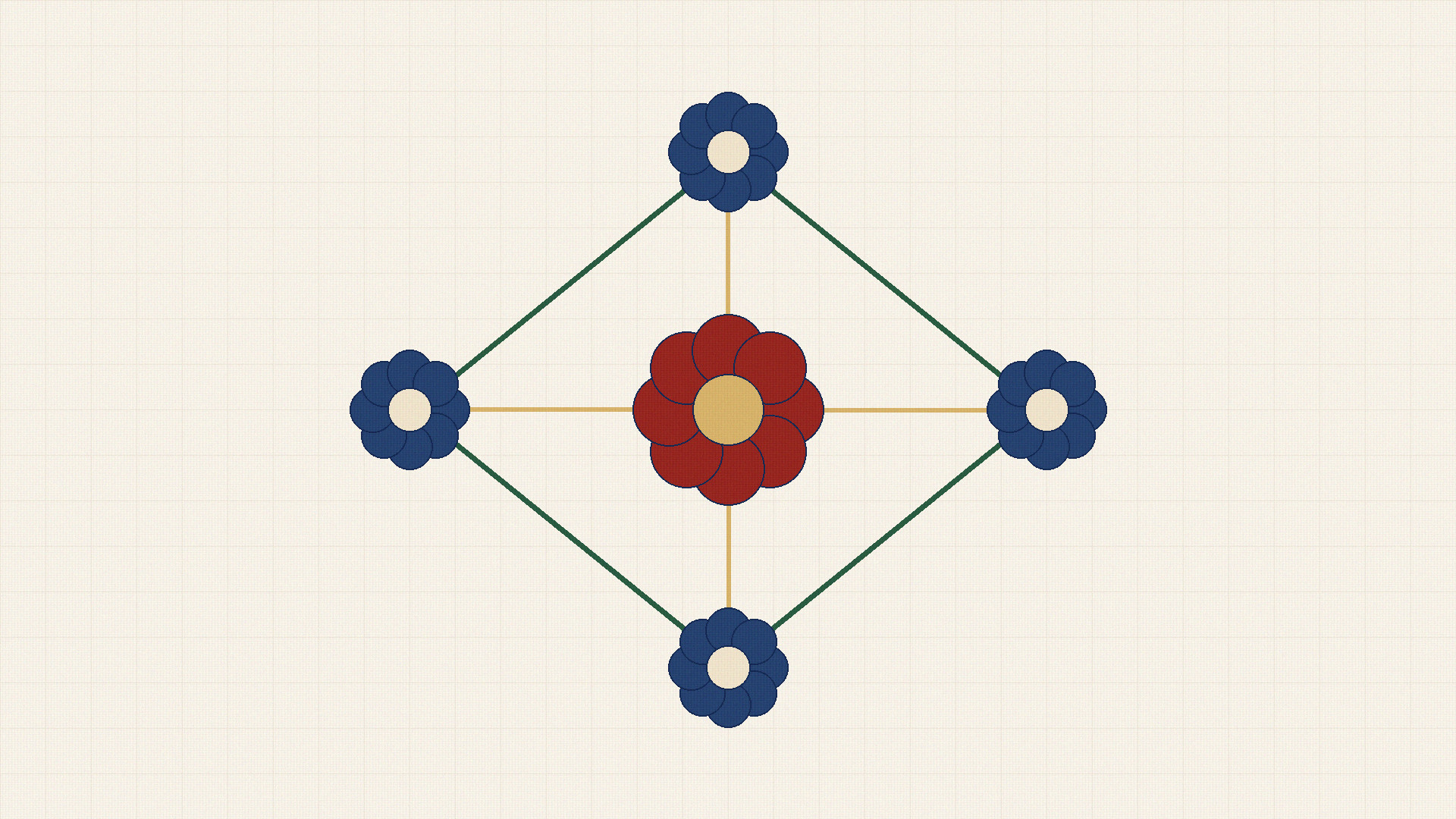
In Persian rug scholarship and workshop terminology, the Mina-Khani pattern is a continuous all-over lattice composition (tarh-e bandi or vagireh-i) formed by two alternating floral elements connected by slender stems 123:
The Central Polychrome Rosette: At the heart of each repeat unit sits a large, round, multi-petalled flower—often compared in textile literature to a stylized daisy, aster, or composite blossom (gol-e mina)—seen flat from above 12.
Four Smaller Satellite Blossoms: Arranged around the central rosette at the four points of a diamond (or square turned on its corner) are four smaller, contrasting flowers or buds, often diamond-shaped or rounded 12.
The Intersecting Vine Lattice: Delicate green, gold, or ivory stems connect the four smaller flowers into a continuous diamond or circular trellis that encloses the central rosette 12. Because each satellite flower is shared with the neighbouring lattice units on all four sides, the repeat locks together seamlessly across the entire width and length of the field 123.
History and Regions Where It Is Documented
In scholarly carpet literature, the name Mina-Khani is widely associated with two overlapping explanations: in Persian, mina (مینا) denotes both a small multi-petalled daisy/marguerite flower and coloured enamelwork, while nineteenth- and twentieth-century rug historians including A. Cecil Edwards and Peter F. Stone also note a traditional attribution to a historical Kurdish or western Iranian tribal khan named Mina Khan 23. Which specific historical figure bore that title, or whether the workshop name originally referred primarily to the mina blossom before merging with oral tribal tradition, is not settled in surviving primary documents and remains uncertain 123.
What is firmly documented in museum collections and field surveys is the regional distribution of the pattern across Iran and neighbouring weaving regions 1234:
Varamin (ورامین): Located south-southeast of Tehran, Varamin is the most famous centre for finely woven town and village carpets featuring the all-over Mina-Khani repeat 23. As documented by A. Cecil Edwards, Varamin weavers perfected bold, well-spaced Mina-Khani lattices on deep indigo-blue, madder-red, or warm ivory grounds, executed with rich, clear colours 3.
Kurdish Weaving Areas (کردستان و شمال غرب ایران): Across western and northwestern Iran, Kurdish weavers have long used the Mina-Khani trellis in both village carpets and long corridor runners, often rendering the flowers with lively, slightly more angular drawing on dark blue or crimson grounds 23.
Bakhtiari and Chahar Mahal Areas (بختیاری): Weavers in the Bakhtiari region of western Iran incorporate Mina-Khani floral lattices both as full-field repeats and within garden or compartment designs 235.
Wider Regional Diffusion: As documented in Encyclopaedia Britannica and textile lexicons, the Persian Mina-Khani repeat also travelled eastward into Khorasan (such as Baluch weavings) and Central Asian Turkmen workshops (including Ersari carpets), where weavers adapted the floral trellis into more geometric forms 24.
How Mina-Khani Differs from the Herati (Mahi) Pattern
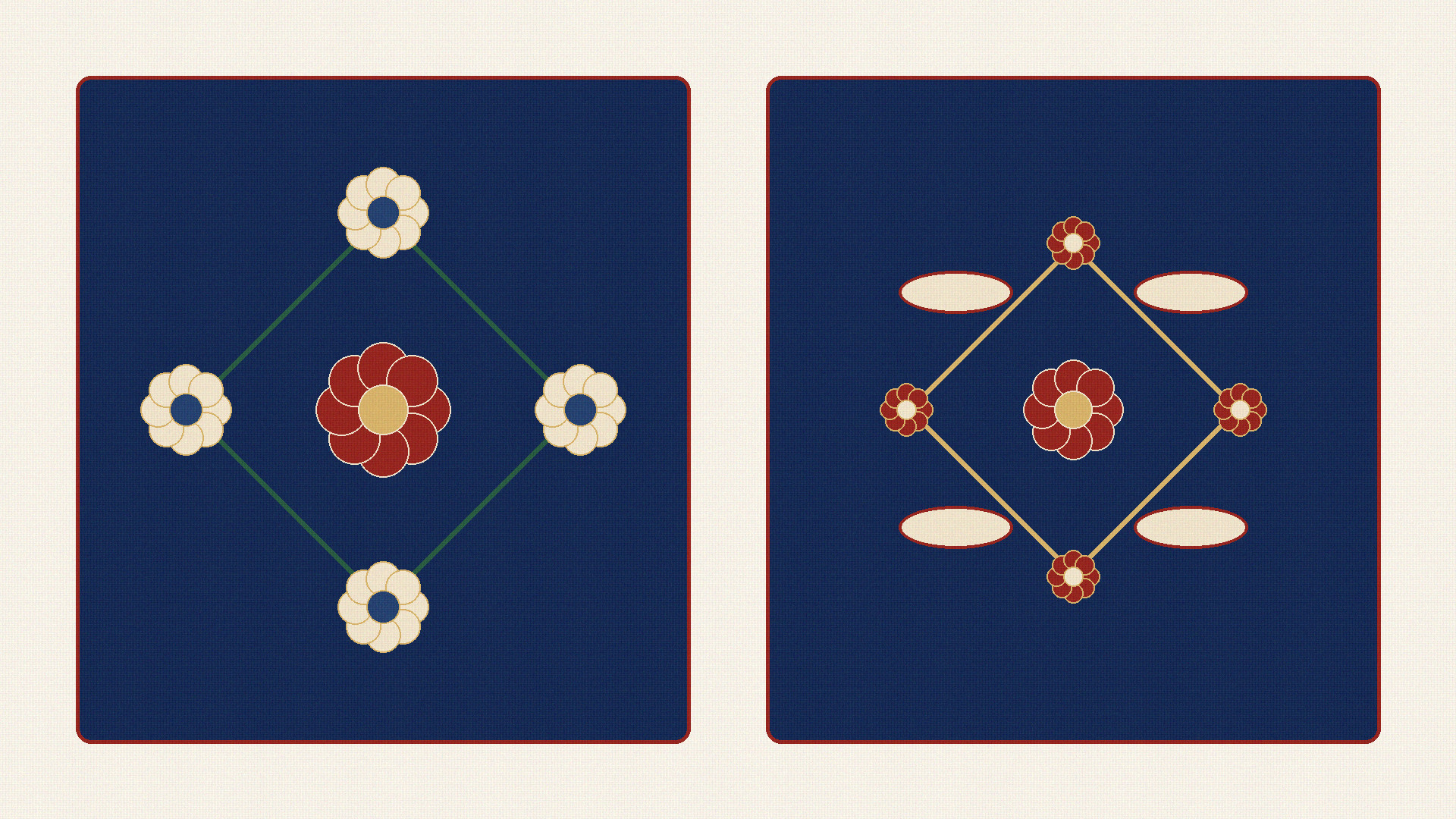
Because both Mina-Khani and Herati (Mahi / ماهی درهم) place a central rosette inside a repeating diamond lattice with four corner flowers, buyers occasionally confuse the two 12. Checking three visual details separates them immediately 123:
Presence or Absence of the Four "Fish" Leaves: In the Herati (Mahi) pattern, four curved, serrated,lancet-shaped leaves—resembling small swimming fish—flank the outside of every diamond frame 12. Mina-Khani never has these four serrated fish leaves 2.
Open Ground vs. Dense Coverage: Herati fills nearly every centimetre of the field with scrolling stems, palmettes, and leaves. Mina-Khani leaves generous, open breathing space of solid ground colour (navy, red, or ivory) around the flowers and thin connecting stems 23.
Flower Shape: Mina-Khani relies on round, open-faced daisy/rosette blossoms viewed from directly above, whereas Herati frequently combines its central rosette with axial palmettes pointing along the vertical and horizontal axes 12.
Layouts Using the Mina-Khani Pattern
Designers apply the Mina-Khani repeat in three primary carpet formats 123:
All-Over Field Repeat (Sarasari / Vagireh-i): The classic Varamin format, in which the floral lattice covers the entire field from end to end without a central medallion, framed by an angular or floral main border 23.
Long Runners (Kenareh / کناره): Because the lattice has no single top or bottom and scales cleanly in narrow widths, Mina-Khani is one of the most popular patterns for hallway and gallery runners 23.
Border Adaptations: A single row of alternating large and small Mina-Khani rosettes linked by waving stems is frequently used as a main or minor border band framing other field patterns 23.
How to Recognise Mina-Khani at a Glance
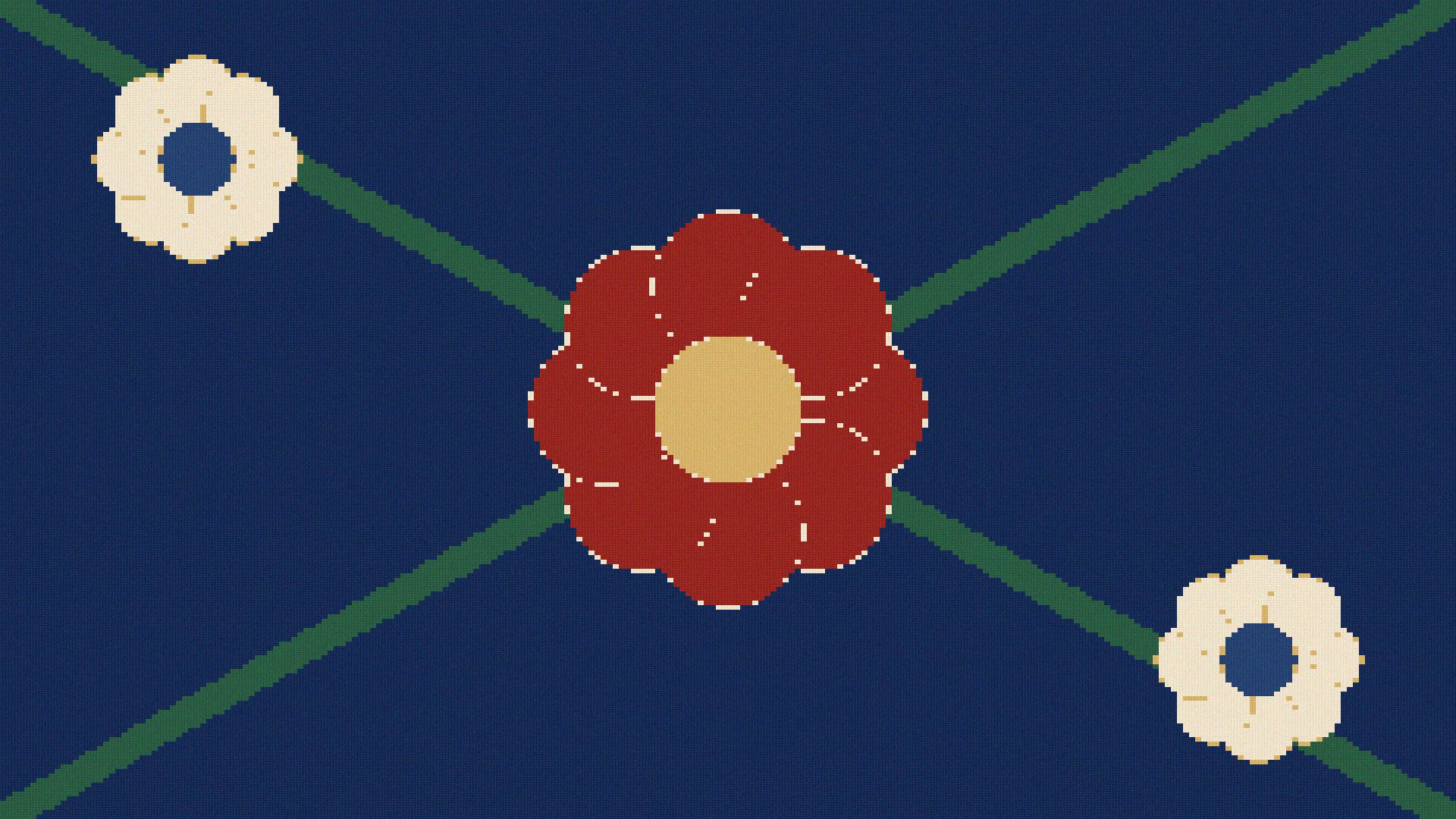
When looking at a rug field, find one large round flower. Look directly above, below, and to the left and right of it for four smaller flowers connected by thin diagonal or curving vine lines. If those four smaller flowers form a clean diamond or circular frame around the large flower—with clear dark or light background visible between them and no curved serrated fish leaves—you are looking at the Mina-Khani pattern 123.
Common Misconceptions
"Every Mina-Khani rug was woven in Varamin." While Varamin is famous for the design, Mina-Khani is a shared Persian pattern family also woven in Kurdish, Bakhtiari, Khorasan, and modern urban workshops 234.
"Mina-Khani and Herati are two names for the same lattice." They are distinct classical repeats; Herati requires the four curved, serrated mahi ("fish") leaves around the diamond, whereas Mina-Khani is an open floral trellis without fish leaves 12.
"The exact biography of 'Mina Khan' is proven in ancient chronicles." Whether the name derives primarily from a tribal ruler named Mina Khan or from the Persian gol-e mina (daisy/enamel blossom) remains uncertain in primary historical sources 23.
"Lattice patterns only suit rustic interiors." Because of its clean geometric rhythm and open ground space, Mina-Khani bridges traditional and contemporary furniture layouts with ease.
A Short Practical Checklist for Buyers
- Count the 1-Plus-4 Unit: Identify one larger central rosette surrounded by four smaller satellite blossoms at the corners of a diamond 12.
- Trace the Connecting Vine: Follow the slender stems linking the four satellite flowers into an endless lattice across the field 12.
- Confirm No Serrated "Fish" Leaves: Verify that there are no curved, toothed Herati leaves hugging the outside of the diamond frame 12.
- Check the Open Ground Space: Notice the clear navy, crimson, or ivory background breathing around each blossom 23.
Frequently Asked Questions (FAQ)
1. What does "Mina-Khani" mean in Persian rug terminology?
Mina-Khani (میناخانی) names a classical all-over floral lattice pattern. In Persian, mina refers to a multi-petalled daisy-like flower and coloured enamelwork, while oral rug tradition also links the name to a historical Kurdish or western Iranian chieftain named Mina Khan (a personal attribution that remains historically uncertain) 23.
2. Which Iranian city is best known for Mina-Khani carpets?
Varamin, just southeast of Tehran, is the weaving centre most famously associated with all-over Mina-Khani carpets on rich indigo-navy, madder-red, and ivory fields, alongside Kurdish and Bakhtiari weaving areas 23.
3. What is the quickest way to tell Mina-Khani apart from Herati (Mahi)?
Look for the four curved, serrated leaves ("fish") outside the diamond frame: if those four fish-like leaves are present, the pattern is Herati; if the lattice consists strictly of round and diamond blossoms on open stems without serrated leaves, it is Mina-Khani 12.
4. Why do interior designers like the Mina-Khani pattern for living and dining rooms?
Because Mina-Khani is an all-over medallionless repeat with generous ground colour between the blossoms, coffee tables and dining sets can sit anywhere on the rug without covering a central focal medallion 13.
Sources
- Annette Ittig, "CARPETS iv. Knotted-pile carpets: Designs, motifs, and patterns," Encyclopaedia Iranica, Vol. IV, Fasc. 8, pp. 845–850 (1990; updated 2017; documents all-over repeating lattice and floral field structures and Herati comparison). https://www.iranicaonline.org/articles/carpets-iv/
- Peter F. Stone, Oriental Rugs: An Illustrated Lexicon of Motifs, Materials, and Origins, Tuttle Publishing, 2013 (entries on "Mina Khani pattern," "Herati pattern," "Varamin," and "Kurdish rugs"). https://search.worldcat.org/title/828416696
- A. Cecil Edwards, The Persian Carpet: A Survey of the Carpet-Weaving Industry of Persia, London: Gerald Duckworth & Co., 1953. https://archive.org/details/persiancarpetsur0000edwa
- Encyclopaedia Britannica, "Ersari carpet". https://www.britannica.com/art/Ersari-carpet
- Annette Ittig, "BAḴTĪĀRĪ TRIBE iii. Baḵtīārī carpets," Encyclopaedia Iranica, Vol. III, Fasc. 5, pp. 559–561. https://www.iranicaonline.org/scholar/annette-ittig/