In the international rug trade, carpets whose main field is organized around a single rising trunk or an arrangement of trees are widely sold under the name "Tree of Life." In Iranian weaving workshops and Persian art scholarship, however, these designs are more precisely described as tarh-e derakhti (طرح درختی, "tree design"), sarv-o-gol (cypress and blossom), or derakht-o-parandeh (tree and bird) 123. While the motif connects deeply to Persian garden literature and decorative arts, separating documented design history from modern retail myth helps buyers appreciate these rugs accurately 234.
What the Motif Looks Like: Tree, Vase, Cypress, and Flowering Forms
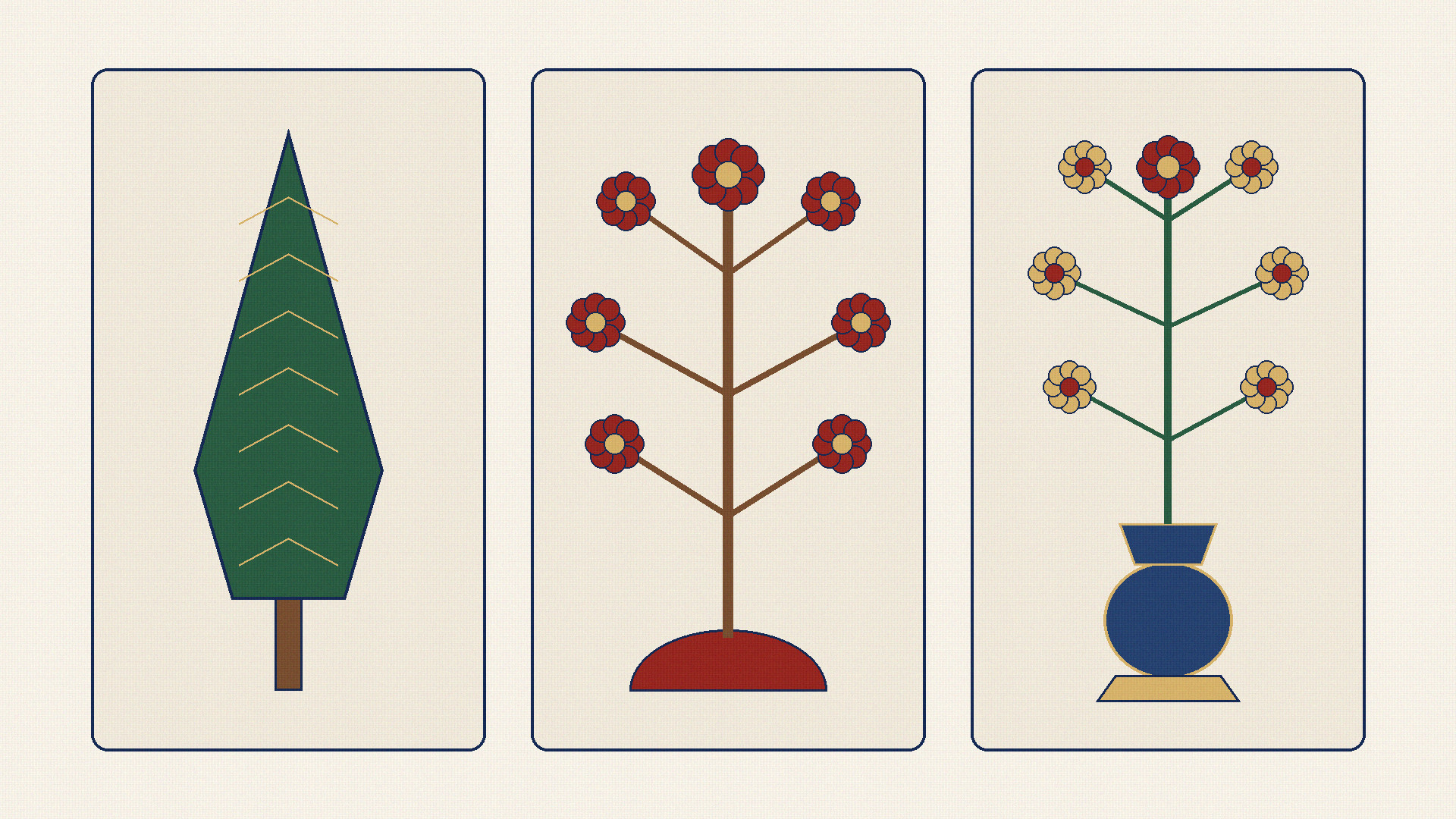
Rather than a single fixed drawing, tree designs in Persian carpets belong to four closely related visual forms 1345:
The Branching Flowering or Fruiting Tree (Derakht-e Gol-dar): A central vertical trunk rises from a small rocky mound or pool at the bottom of the field and spreads its branches across the full height of the rug 135. Its limbs carry stylized pomegranates, lotus palmettes, rosettes, serrated leaves, and perched birds 35.
The Vase-Borne Tree (Gol-o-Goldan or Vase-and-Tree): Instead of growing from soil, the central trunk or overflowing floral bouquet emerges from a two-handled vase orfooted urn near the base of the field, combining the goldani (vase) and derakhti (tree) traditions 136.
The Evergreen Cypress (Sarv / سرو): The Mediterranean cypress (Cupressus sempervirens, known in Persian as sarv-e naz or sarv-e shirazi) appears as a tall, slender, flame-shaped or columnar evergreen cone 23. It either flanks a central flowering tree or alternates in rows across garden and compartment carpets 237.
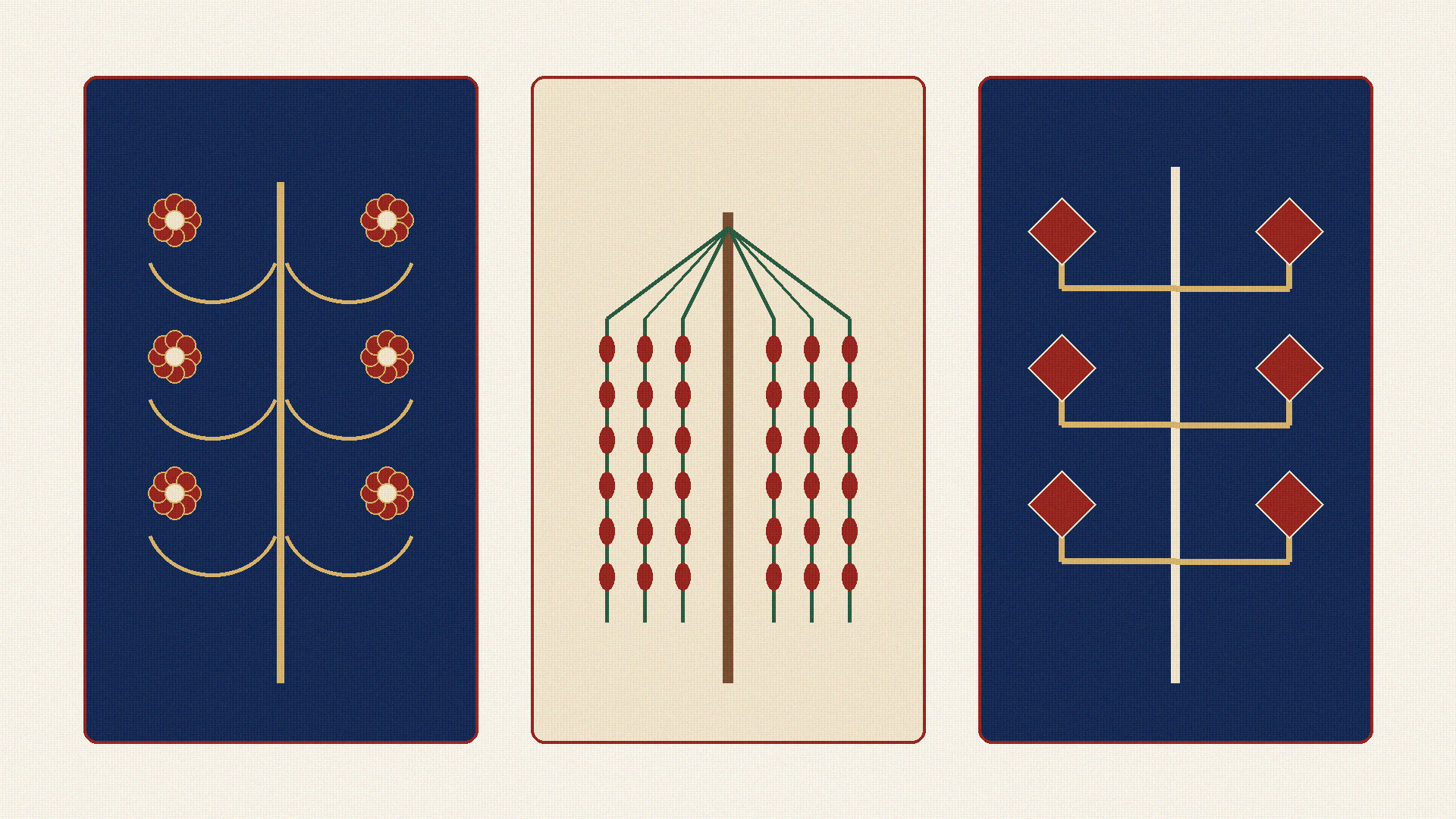
The Weeping Willow (Bid-e Majnun / بید مجنون): A tree whose upper limbs arch outward and cascade downward in parallel leafy strands, frequently paired with upright cypresses in village and tribal carpets 37.
Where It Appears: Prayer-Rug Layouts, Directional Fields, and Pictorial Rugs
Unlike all-over Afshan or symmetric Lachak-Toranj medallion rugs that look identical from both ends, a tree carpet is almost always directional (one-way) 13. It has a clear bottom (the roots, mound, or vase) and a clear top (the canopy) 13:
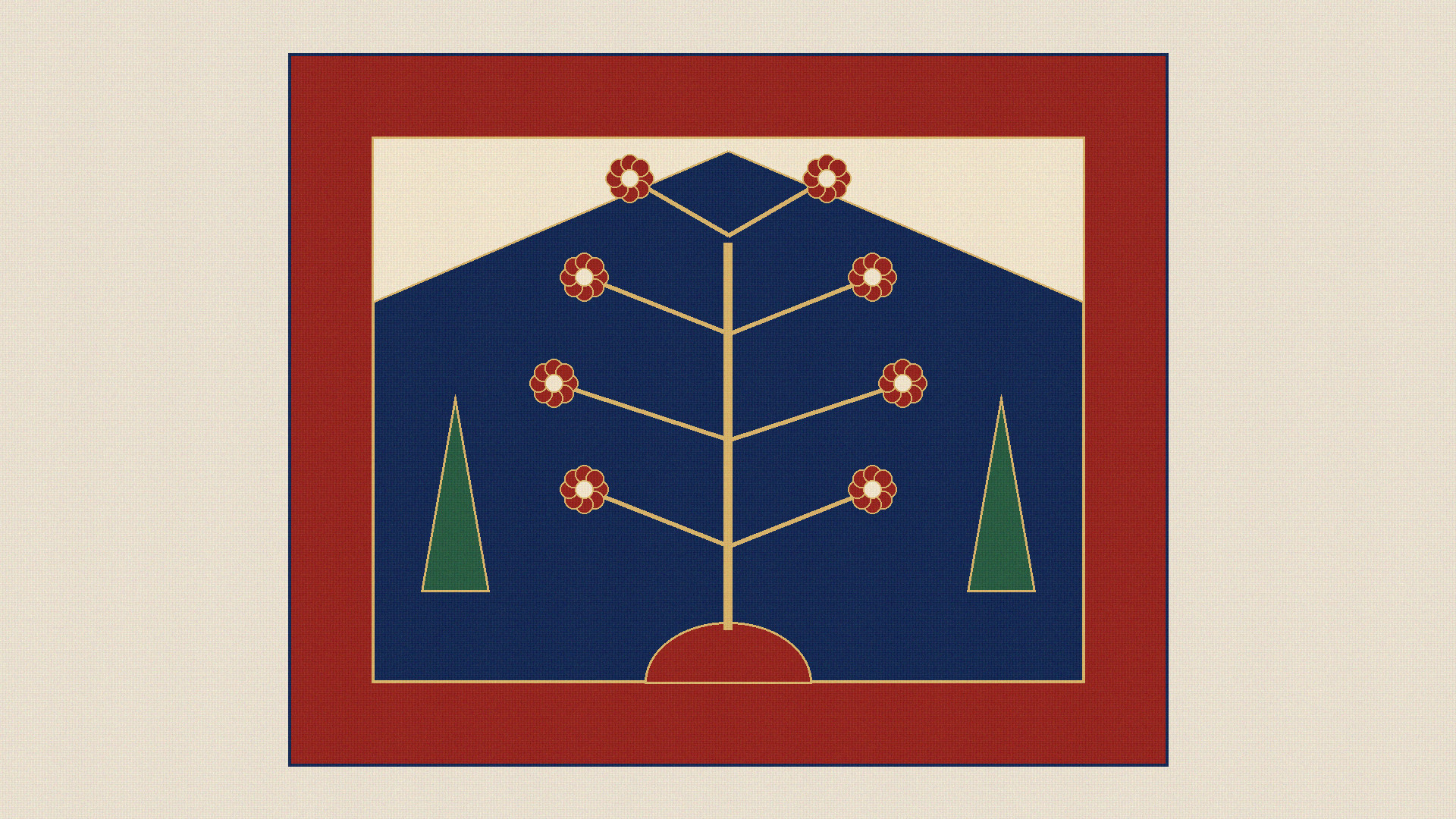
Arch and Prayer-Niche Layouts (Mihrabi / محرابی): Many tree rugs frame the upper canopy inside a stepped or curvilinear arch (mihrab), with floral spandrels above the arch and a single tree or vase rising inside the niche 138.
Directional Full-Field Tree Layouts (Derakhti): A single monumental tree or a landscape of multiple trees, shrubs, streams, and animals fills the entire rectangular field from base to top without an enclosing prayer arch 135.
Compartment and Garden Panels (Kheshti): Individual trees—alternating between upright cypresses, weeping willows, and flowering shrubs—occupy square or rectangular frames across a tiled grid 17.
What Is Documented vs. What Is Interpretation
Few motifs attract more speculative storytelling in commercial rug showrooms than the "Tree of Life." In academic textile history and museum scholarship, researchers distinguish between three levels of evidence 124:
Documented Historical Context: Ancient Near Eastern and Sasanian reliefs, seals, and metalwork already featured stylized sacred or axial trees flanked by animals 4. In the Islamic era—and especially under the Safavid dynasty (1501–1736)—tree, bird, and garden compositions flourished across illuminated manuscripts (such as the Shahnameh and Khamsa of Nizami), architectural tilework, and court carpets 45. As art historian Lisa Golombek notes in Encyclopaedia Iranica, most vegetal and tree ornament in Persian art acts primarily as an aesthetic evocation of the cultivated Persian garden and nature, while specific paradisiac associations are best documented in funerary, shrine, or prayer-niche contexts 4.
Plausible Cultural Association: In classical Persian poetry and visual culture, the evergreen cypress (sarv) is documented as a recurring metaphor for upright grace, vitality, and enduring greenness across seasons, while spring blossoms evoke renewal 24.
Modern Poetic or Commercial Interpretation (Uncertain as History): The exact English phrase "Tree of Life" is largely a nineteenth- and twentieth-century Western trade and art-historical umbrella label applied to diverse Iranian derakhti rugs 3. Furthermore, retail claims that every branch count, bird species, or fruit on a commercial rug encodes a fixed mystical or astrological secret are undocumented in primary Iranian workshop records and remain uncertain 34.
Regional Examples Across Iran
Both urban court workshops and rural weavers developed distinctive approaches to the tree design 1357:
Safavid and Modern Kerman (کرمان) and Ravar: Famous for delicate, naturalistic tree and bird compositions (derakht-o-parandeh) and vase-tree rugs on ivory, crimson, or midnight-blue grounds 357.
Isfahan (اصفهان) and Kashan (کاشان): Urban master draughtsmen created finely balanced mihrabi and full-field tree carpets populated with Shah Abbasi blossoms, songbirds, deer, and winding streams at the tree base 37.
Tabriz (تبریز): Known for both classical Safavid-inspired tree-and-animal carpets and four-season or garden-tree compositions 37.
Bakhtiari (بختیاری), Veramin, and Kurdish Weaving Areas: Celebrated for bold, stylized sarv-o-kaj (cypress and pine), weeping willow (bid-majnun), and compartment (kheshti) tree rugs with vibrant madder, indigo, green, and gold palettes 378.
How to Recognise the Motif
A true Persian tree design is defined by its vertical axial growth 13. Unlike an Afshan carpet where scrolling vines spread equally in all four directions, a derakhti rug organizes its branches upward from a single base—a mound of earth, a small stream pool, or a decorative vase—toward the upper border 135.
Common Misconceptions
"Every Tree of Life rug is a religious prayer rug." Even when a tree rug includes an upper arch (mihrab) or directional layout, many were woven as decorative room carpets or wall hangings rather than exclusively for daily liturgical prayer 34.
"Iranian weavers always called every tree rug the 'Tree of Life'." Traditional Persian workshop terms are descriptive—such as derakhti (tree design), sarv (cypress), bid-majnun (weeping willow), or goldani (vase)—whereas "Tree of Life" is a broad international trade and scholarly category 123.
"Every bird or fruit on the tree has one universal dictionary meaning." While birds and pomegranates belong to classical Persian garden imagery, assigning a single fixed code to every animal or blossom across different regions and centuries is unsupported by historical workshop texts and remains uncertain 34.
"Directional tree rugs cannot be used on the floor." Directional tree rugs work beautifully on the floor in living rooms and studies; they simply require orienting the base of the tree toward the main viewing entrance 3.
A Short Practical Checklist for Buyers
- Locate the Base of the Trunk: Check the lower end of the field for a rocky mound, stream bank, or two-handled vase from which the main trunk rises 13.
- Identify the Tree Type: Distinguish between a branching flowering/fruiting tree, a columnar evergreen cypress (sarv), and a cascading weeping willow (bid-majnun) 23.
- Plan Room Orientation: Because the design is one-way, place the rug so guests entering the room view the tree right-side up from base to canopy 13.
- Separate Design Facts from Myth: Enjoy the poetic garden heritage of the pattern without paying a premium for unverified symbolic stories 34.
Frequently Asked Questions (FAQ)
1. What do Iranian weavers call the Tree of Life design in Persian?
In Persian workshop terminology, tree carpets are called tarh-e derakhti (طرح درختی, "tree design"). Specific variations are named after their main botanical elements, such as sarv (cypress), bid-majnun (weeping willow), or gol-o-goldan (flower and vase) 123.
2. Why are cypress trees so common in Persian rugs?
The evergreen cypress (sarv) has been cultivated in Iranian gardens since antiquity and is celebrated in Persian poetry and visual art for its graceful upright silhouette and year-round green foliage 24.
3. Which way should a directional tree rug face in a room?
Orient the rug so the roots or vase at the bottom of the field sit closest to the main doorway or primary seating sofa, allowing viewers to read the tree naturally from trunk to crown 13.
4. Are Tree of Life designs available in modern machine-made Persian rugs?
Yes; contemporary Iranian machine-made rug designers adapt both classical Kerman and Isfahan curvilinear tree-and-bird compositions and geometric compartment tree layouts for floor and decorative use.
Sources
- Annette Ittig, "CARPETS iv. Knotted-pile carpets: Designs, motifs, and patterns," Encyclopaedia Iranica, Vol. IV, Fasc. 8, pp. 845–850 (1990; updated 2017; documents directional prayer-arch, vase, tree, and compartment carpet designs). https://www.iranicaonline.org/articles/carpets-iv/
- Houshang Alam, "CYPRESS (sarv)," Encyclopaedia Iranica, Vol. VI, Fasc. 5, pp. 505–508 (1993; updated 2013; documents the botanical varieties and cultural history of sarv in Iranian gardens and art). https://www.iranicaonline.org/articles/cypress-sarv-cupressus-tourn/
- Peter F. Stone, Oriental Rugs: An Illustrated Lexicon of Motifs, Materials, and Origins, Tuttle Publishing, 2013 (entries on "Tree of Life," "Cypress," "Weeping willow / Bid Majnun," and "Vase carpet"). https://search.worldcat.org/title/828416696
- Lisa Golombek, "GARDEN vi. In Persian Art," Encyclopaedia Iranica, Vol. X, Fasc. 3, pp. 310–313 (2000; updated 2016; documents ancient Near Eastern tree motifs, vegetal ornament as an evocation of nature, and contexts where paradisiac symbolism is supported). https://www.iranicaonline.org/articles/garden-vi/
- The Metropolitan Museum of Art, New York, "Carpet with Tree and Bird Design (Object Number 17.120.126), Attributed to Iran, 17th century." https://www.metmuseum.org/art/collection/search/446959
- The Metropolitan Museum of Art, New York, "Vase Carpet (Object Number 43.121.2), Iran, probably Kerman, 17th century." https://www.metmuseum.org/art/collection/search/450510
- A. Cecil Edwards, The Persian Carpet: A Survey of the Carpet-Weaving Industry of Persia, London: Gerald Duckworth & Co., 1953. https://archive.org/details/persiancarpetsur0000edwa
- The Metropolitan Museum of Art, New York, "Bakhtiari Carpet with Prayer Rug Design (Object Number 2009.458.15), Western Iran, late 19th–early 20th century." https://www.metmuseum.org/art/collection/search/456984