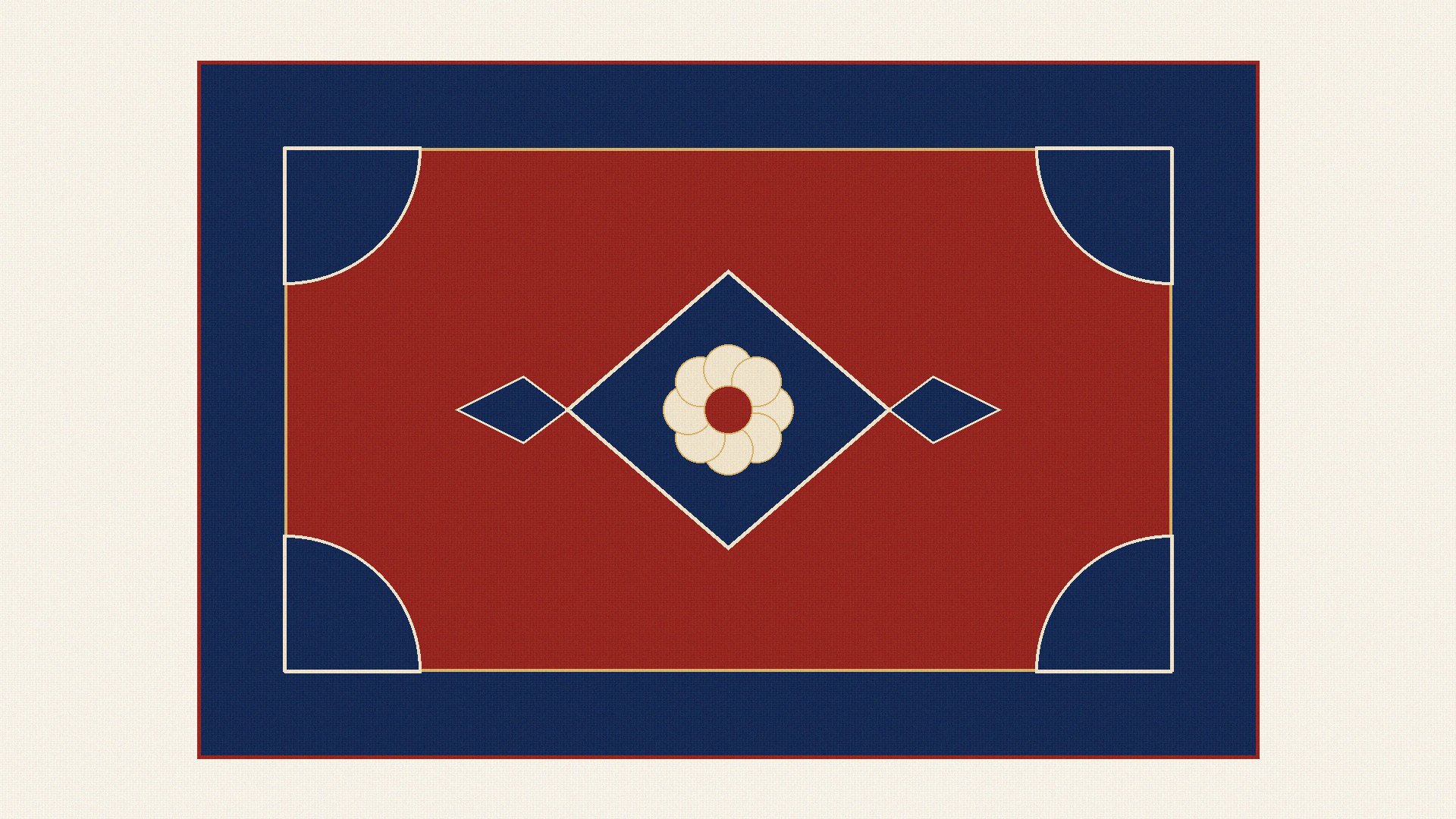
Situated along the historic trade route at the western edge of Iran’s central desert beside the Karkas Mountains, the oasis city of Kashan (کاشان) has been synonymous with luxury Persian textiles for over four centuries 123. For international buyers and collectors, the phrase "Kashan carpet" evokes the classic image of the formal Persian rug: a diamond-lobed central medallion, matching corner spandrels, and a lush field of Shah Abbasi palmettes and leafy vines set against a glowing madder-red or deep indigo-navy ground 145.
Kashan as a Weaving Centre: Safavid and Later Periods
Kashan’s textile heritage unfolded across two distinct historical eras separated by a long period of transition 134:
The Safavid Golden Age (16th–17th Centuries): Under the Safavid rulers—particularly Shah Tahmasp I and Shah Abbas I—Kashan was renowned across Eurasia for its silk velvets, brocades, and small, jewel-like all-silk pile carpets and flatwoven silk and metal-thread kilims 136. European travellers and court inventories praised Kashan’s silk workshops, and several seventeenth-century silk and metal-thread "Polonaise" carpets are also associated by scholars with Kashan alongside Isfahan 13.
The 18th- and Early 19th-Century Gap: Following the fall of the Safavid dynasty in 1722, documented pile-carpet production in Kashan declined sharply; as Encyclopaedia Britannica notes, very little is securely recorded of pile carpet weaving in the city between the late seventeenth and mid-nineteenth centuries, while Kashan remained active in silk fabric weaving and wool spinning 147.
The Late Qajar Revival (Late 19th–20th Centuries): In the late nineteenth century, as international demand for Persian carpets surged while European machine-made fabrics competed with local cloth weaving, Kashan merchants redirected their skilled workforce and fine imported merino and local yarns into knotted-pile carpets 147. Beginning in the 1890s—associated in bazaar tradition with master weavers such as Hajji Mollah Hassan Mohtasham—Kashan rapidly rose again to the top tier of Iranian urban carpet production 45.
Typical Designs and Colours: Medallion, Deep Red, and Navy Grounds
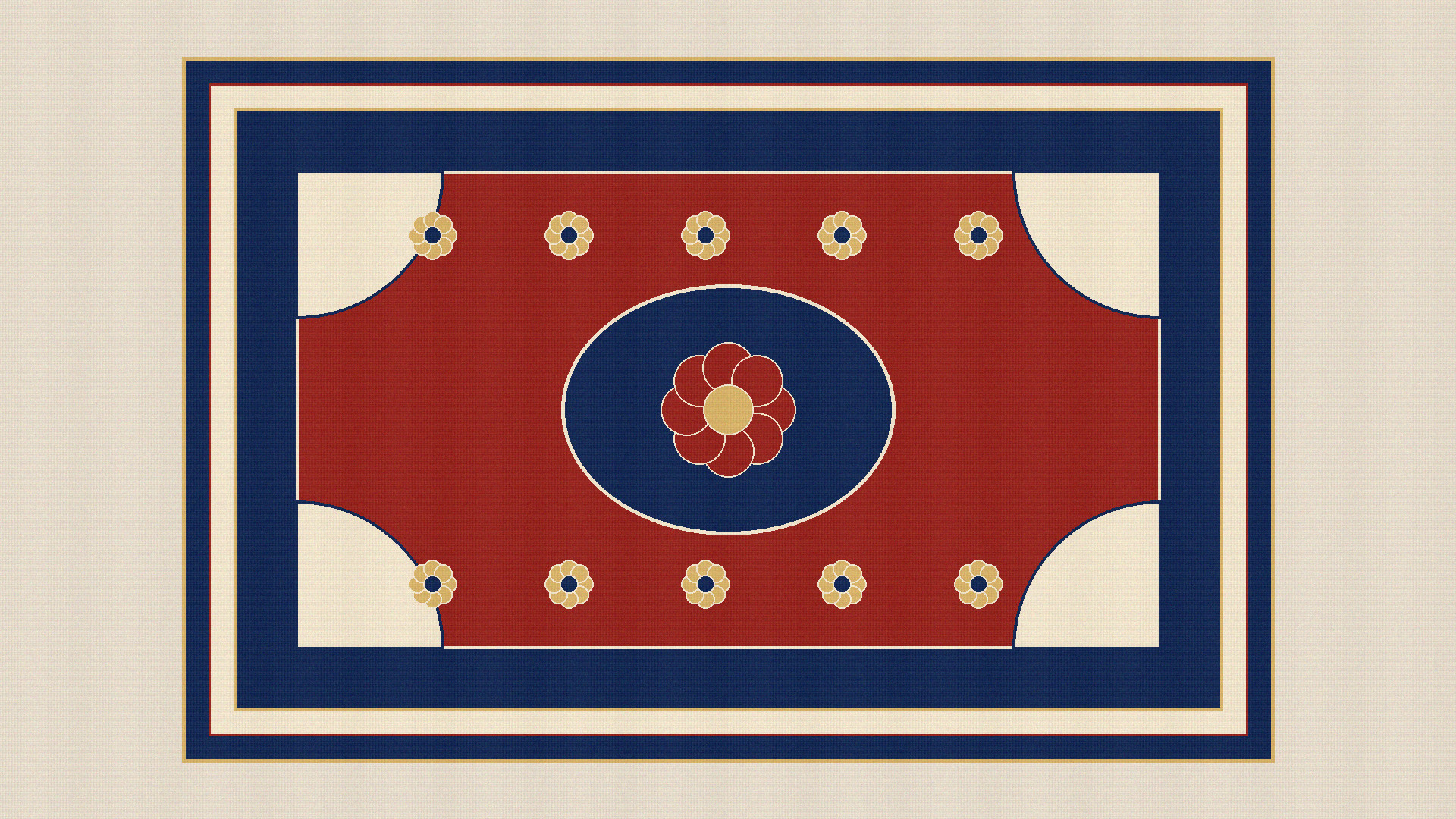
While Kashan weavers have produced prayer rugs, tree designs, and all-over floral fields, the city’s signature look is defined by a cohesive visual grammar 1458:
The Classical Lachak-Toranj (Medallion-and-Corner) Layout: At the centre of the field sits a symmetrical, diamond-lobed or scalloped oval medallion (toranj), extended along the vertical axis by two floral pendants (sar-toranj) 458. Four quarter-medallion corner spandrels (lachak) frame the corners of the field in balanced proportion 458.
Lush Curvilinear Floral Fields: Every centimetre of the field around the medallion is filled with scrolling khatai stems carrying multi-layered Shah Abbasi palmettes, rosettes, pomegranate buds, and delicate serrated leaves 458.
Deep Crimson Red and Indigo Navy Palettes: Traditional Kashan carpets are famous for their rich madder-crimson or lacquer-red (laki) fields paired with deep indigo-navy (sormeh-i) medallions and main borders, accented by warm ivory, turquoise, sky blue, and sage green 145. In the twentieth century, workshops also introduced full-ivory and beige grounds alongside the classic red-and-navy palette 45.
Multi-Band Shah Abbasi Borders: A wide navy or crimson main border featuring alternating lotus palmettes and rosettes is typically flanked by two or three pairs of narrower floral minor borders and reciprocal madakhel guard stripes 458.
Well-Known Historical Pieces in Museums
Surviving sixteenth-century silk carpets attributed to Safavid Kashan rank among the greatest treasures of world museums 136:
The Silk Kashan Animal Carpet at The Metropolitan Museum of Art (New York): Dated to the sixteenth century (Object Number 14.40.721, Bequest of Benjamin Altman), this celebrated small silk pile carpet features a directional display of lions, tigers, jackals, and deer amidst lush flowering trees on a glowing crimson ground framed by a cartouche-and-palmette border 6.
Safavid Silk Medallion Carpets and Tapestry-Woven Kilims: As documented in Encyclopaedia Iranica and Encyclopaedia Britannica, a select group of about twenty surviving sixteenth-century small silk carpets—most featuring central medallions and four featuring rows of animals—along with silken tapestry-woven kilims enriched with gold and silver thread, are attributed to Safavid Kashan in major European and American museum collections 13. Whether every individual silk carpet in this sixteenth-century group was woven inside the city walls of Kashan versus a neighbouring royal workshop remains a subject of scholarly comparison and is partly uncertain where inscriptions are absent 3.
Kashan in Today’s Iranian Rug Production
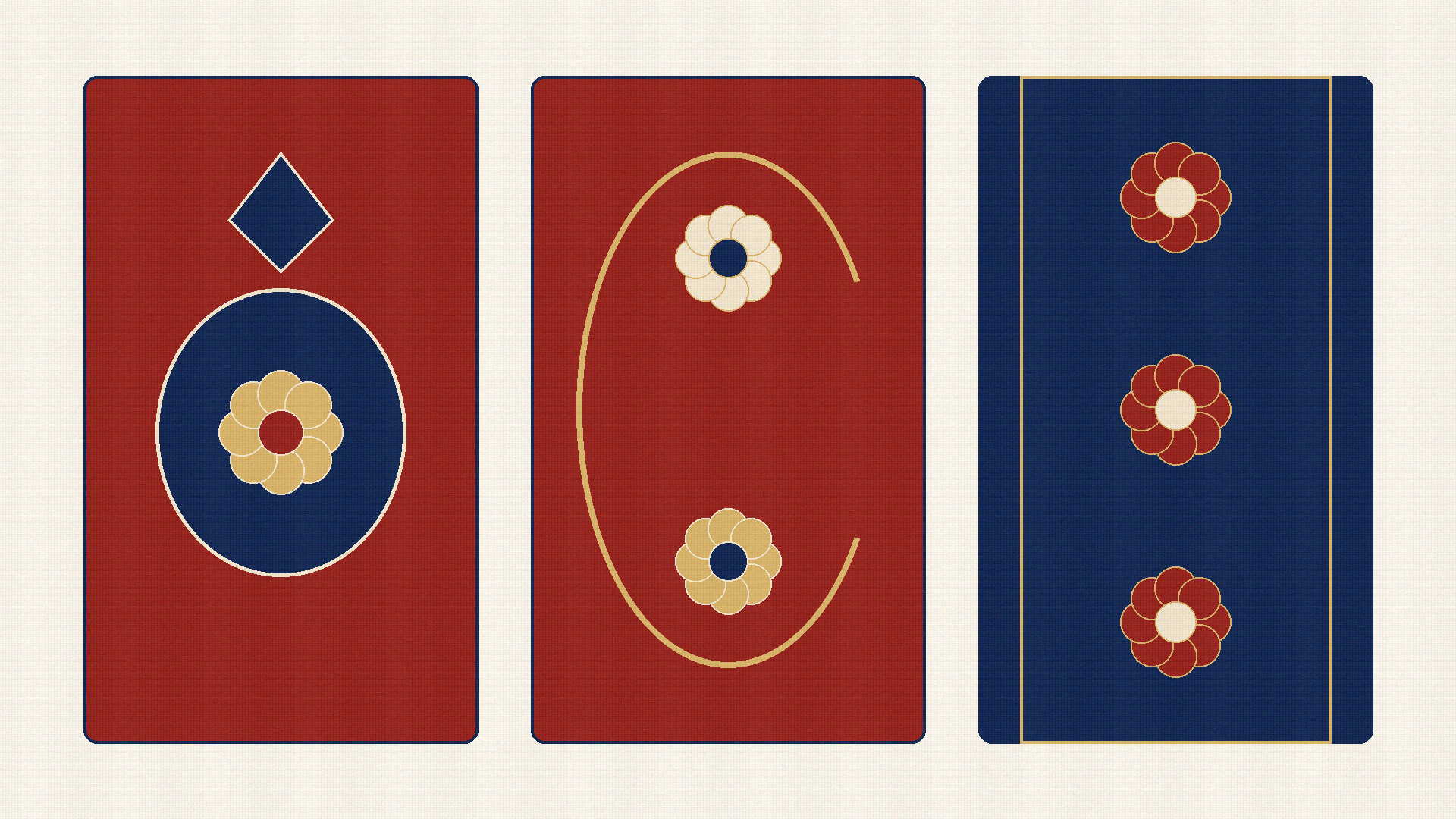
Since the second half of the twentieth century, Kashan and its surrounding industrial district (alongside neighboring Qom) have evolved into the primary heartland of Iran’s modern machine-made rug industry while continuing hand-knotted workshop traditions 2. Today, international wholesale buyers source both classical Kashan Lachak-Toranj designs in traditional red, navy, and ivory palettes and contemporary all-over Afshan and neoclassical interpretations produced on modern industrial looms in the Kashan–Qom corridor.
Common Misconceptions
"Every carpet with a red field and central medallion is from Kashan." While Kashan popularized the crimson-and-navy Lachak-Toranj look, workshops in Isfahan, Tabriz, Mashhad, and Qom also weave medallion carpets with distinct floral and structural traits 48.
"'Mohtasham' is a separate city in Iran." Mohtasham refers to the celebrated late nineteenth-century Kashan master weaver Hajji Mollah Hassan Mohtasham (and the high-grade late Qajar workshop style associated with his name), not a geographic town 45.
"Kashan only weaves red and navy rugs." Although madder red and indigo navy are its historic signature, Kashan workshops have woven ivory, cream, light blue, and celadon-green carpets for over a century 45.
"Every 16th-century silk carpet carries a written Kashan label." Unlike the dated Ardabil Carpet, most sixteenth-century small silk carpets lack city inscriptions; their attribution to Kashan rests on travellers’ accounts and technical comparisons, leaving individual borderline attributions uncertain 13.
A Short Practical Checklist: How to Recognise a Classic Kashan Design
- Check the Diamond-Lobed Medallion: Look for a balanced central medallion with stepped or scalloped lobes and two axial pendants (sar-toranj) 45.
- Match the Four Corner Spandrels: Verify that the four field corners (lachak) echo the medallion’s colour and floral tracery 458.
- Inspect the Dense Floral Field: Observe how closely spaced Shah Abbasi palmettes, rosettes, and tiny buds fill the crimson, navy, or ivory ground without empty gaps 45.
- Read the Multi-Band Border: Count the wide Shah Abbasi main border framed by multiple narrow floral minor borders and a reciprocal madakhel inner guard 45.
Frequently Asked Questions (FAQ)
1. What makes a Kashan carpet design recognizable?
A classic Kashan carpet combines a central diamond-lobed medallion and axial pendants (sar-toranj), four matching corner spandrels (lachak), a tightly filled field of curvilinear Shah Abbasi blossoms, and a contrasting multi-band floral border—traditionally in crimson red, deep navy, and ivory 145.
2. Where is Kashan located in Iran?
Kashan is a historic oasis city in Isfahan Province in central Iran, situated along the eastern foothills of the Karkas Mountains on the edge of the central desert (Dasht-e Kavir), roughly midway between Tehran and Isfahan 2.
3. What is a "Kashan Mohtasham" carpet?
In antique rug scholarship, "Mohtasham Kashan" designates fine late nineteenth-century carpets woven in Kashan during the revival led by the master weaver Hajji Mollah Hassan Mohtasham, noted for supple wool and rich vegetable dyes 45.
4. Why is Kashan important for modern machine-made Persian rugs?
Building on centuries of textile expertise, Kashan—together with nearby Qom—became the central hub of Iran’s modern machine-made carpet industry in the late twentieth and twenty-first centuries, exporting classic and contemporary Persian rug designs worldwide 2.
Sources
- Encyclopaedia Britannica, "Kāshān carpet | Persian, Wool, Hand-knotted". https://www.britannica.com/art/Kashan-carpet
- Xavier De Planhol, "KASHAN ii. HISTORICAL GEOGRAPHY," Encyclopaedia Iranica, Vol. XVI, Fasc. 1, pp. 2–5 (2012; updated 2017; documents Kashan’s oasis geography along the Karkas range and its modern industrial growth centred on textile production). https://www.iranicaonline.org/articles/kashan-ii-historical-geography/
- Daniel Walker, "CARPETS ix. Safavid Period," Encyclopaedia Iranica, Vol. IV, Fasc. 8, pp. 866–875 (1990; updated 2017; documents Safavid silk pile carpets, animal carpets, and Polonaise carpets associated with Kashan and Isfahan). https://www.iranicaonline.org/articles/carpets-ix/
- A. Cecil Edwards, The Persian Carpet: A Survey of the Carpet-Weaving Industry of Persia, London: Gerald Duckworth & Co., 1953. https://archive.org/details/persiancarpetsur0000edwa
- Peter F. Stone, Oriental Rugs: An Illustrated Lexicon of Motifs, Materials, and Origins, Tuttle Publishing, 2013 (entries on "Kashan" and "Mohtasham"). https://search.worldcat.org/title/828416696
- The Metropolitan Museum of Art, New York, "Silk Animal Carpet (Object Number 14.40.721), Attributed to Iran, Kashan, 16th century." https://www.metmuseum.org/art/collection/search/446642
- Annette Ittig, "CARPETS xi. Qajar Period," Encyclopaedia Iranica, Vol. IV, Fasc. 8, pp. 877–883 (1990; updated 2017; documents the late 19th-century expansion of Persian urban carpet weaving). https://www.iranicaonline.org/articles/carpets-xi/
- Annette Ittig, "CARPETS iv. Knotted-pile carpets: Designs, motifs, and patterns," Encyclopaedia Iranica, Vol. IV, Fasc. 8, pp. 845–850 (1990; updated 2017; documents medallion, corner spandrel, and Shah Abbasi floral layouts). https://www.iranicaonline.org/articles/carpets-iv/