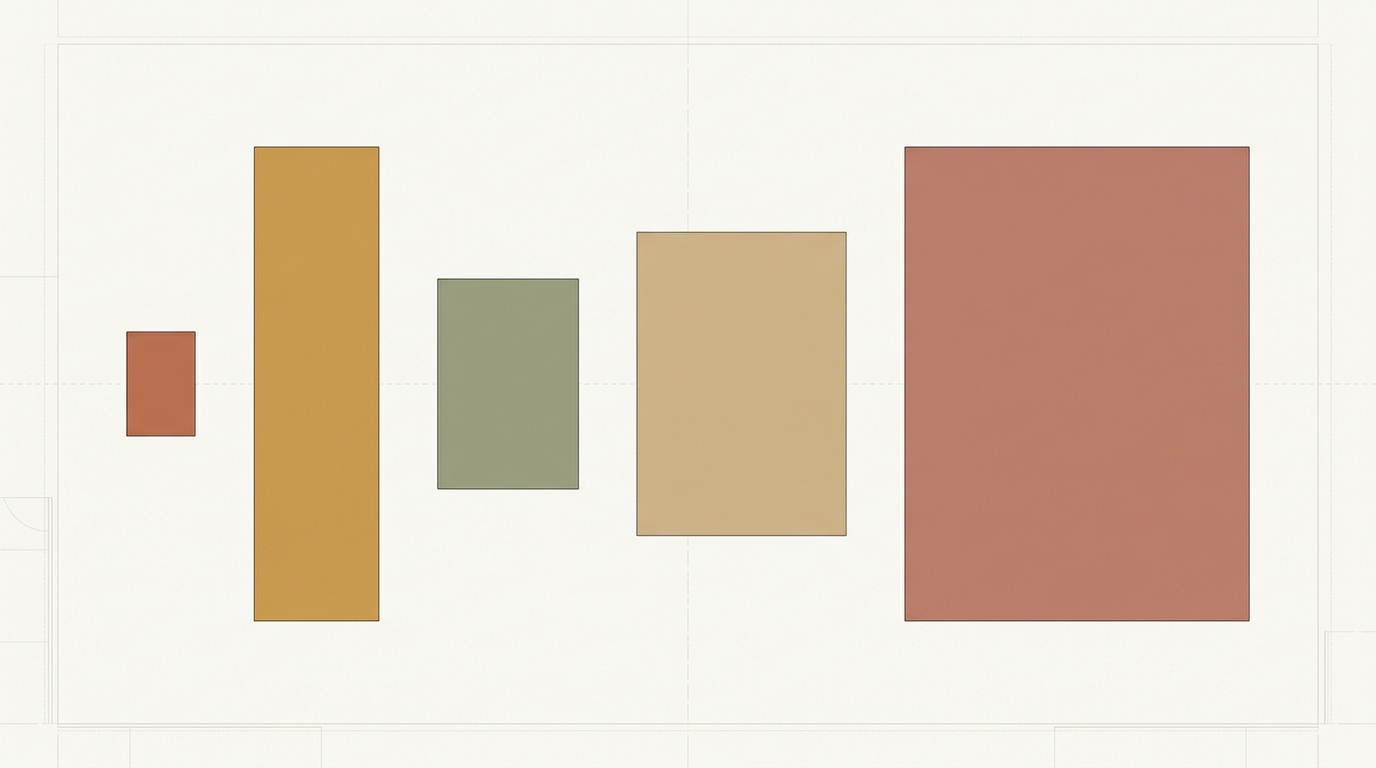
Iranian traders describe a rug either by a traditional name, such as dozar, or by its size in metres, such as 2 × 3 m. Buyers in the United States and the United Kingdom often think in feet, such as 6 × 9 ft. These are not the same: a 2 × 3 m rug is 6'7" × 9'10", clearly larger than a 6 × 9 ft rug (183 × 274 cm) 2. This guide explains the names, gives exact conversions and offers simple rules for choosing a size.
Traditional Persian size names
Many Iranian size names come from an old unit of length, the zar. Rug dictionaries list names such as dozar for a rug of roughly 4 × 6 feet 1. The names describe a size class, not one exact measurement, and real sizes vary by producer.
These are the names you will hear most in today's Iranian trade, with their usual ranges:
- Poshti: a very small mat, about 0.5 × 0.8 m.
- Zar-o-nim: a small rug, about 1 × 1.5 m.
- Dozar (dozari): a medium rug, about 1.3 × 2 m to 1.5 × 2.25 m.
- Pardeh: larger than a dozar and smaller than a room-size rug.
- Qali (room size): about 2 × 3 m and larger.
- Kenareh: a long, narrow runner.
- Kelleghi: a wide, long rug traditionally laid at the head of a room.
Room-size rugs are also named by area in Iran: a 2 × 3 m rug is a "6-metre" rug, 3 × 4 m is a "12-metre" rug, and 2.5 × 3.5 m is usually called a "9-metre" rug, although its true area is 8.75 m². Always confirm the length and width, not only the nickname.
Common machine-made sizes in metres and feet
Iranian machine-made rugs are made and sold in metric sizes. The feet-and-inches values below are exact conversions (1 foot = 0.3048 m), rounded to the nearest inch 2.
| Size (m) | Size (ft, in) | Typical use |
|---|---|---|
| 0.5 × 0.8 | 1'8" × 2'7" | Door mat |
| 1 × 1.5 | 3'3" × 4'11" | Entrance, bedside |
| 1.5 × 2.25 | 4'11" × 7'5" | Small living area |
| 2 × 3 | 6'7" × 9'10" | Living room, table for six |
| 2.5 × 3.5 | 8'2" × 11'6" | Large living room, table for eight |
| 3 × 4 | 9'10" × 13'1" | Large reception room |
| 0.8 × 2 | 2'7" × 6'7" | Short runner |
| 0.8 × 3 | 2'7" × 9'10" | Long runner |
| 2 × 2 round | 6'7" diameter | Round table for four to six |
Not every design is made in every size.
How size is measured
In the trade, the stated size usually means the woven body of the rug, without the fringe. If a 2 × 3 m rug has 10 cm of fringe at each end, it will take about 3.2 m of floor. Ask the seller to confirm how the size was measured.
A woven rug is a textile, not a tile. Small differences of a few centimetres between the stated and the measured size are normal. For tight spaces, ask for the exact measured size before ordering.
Choosing a size by room
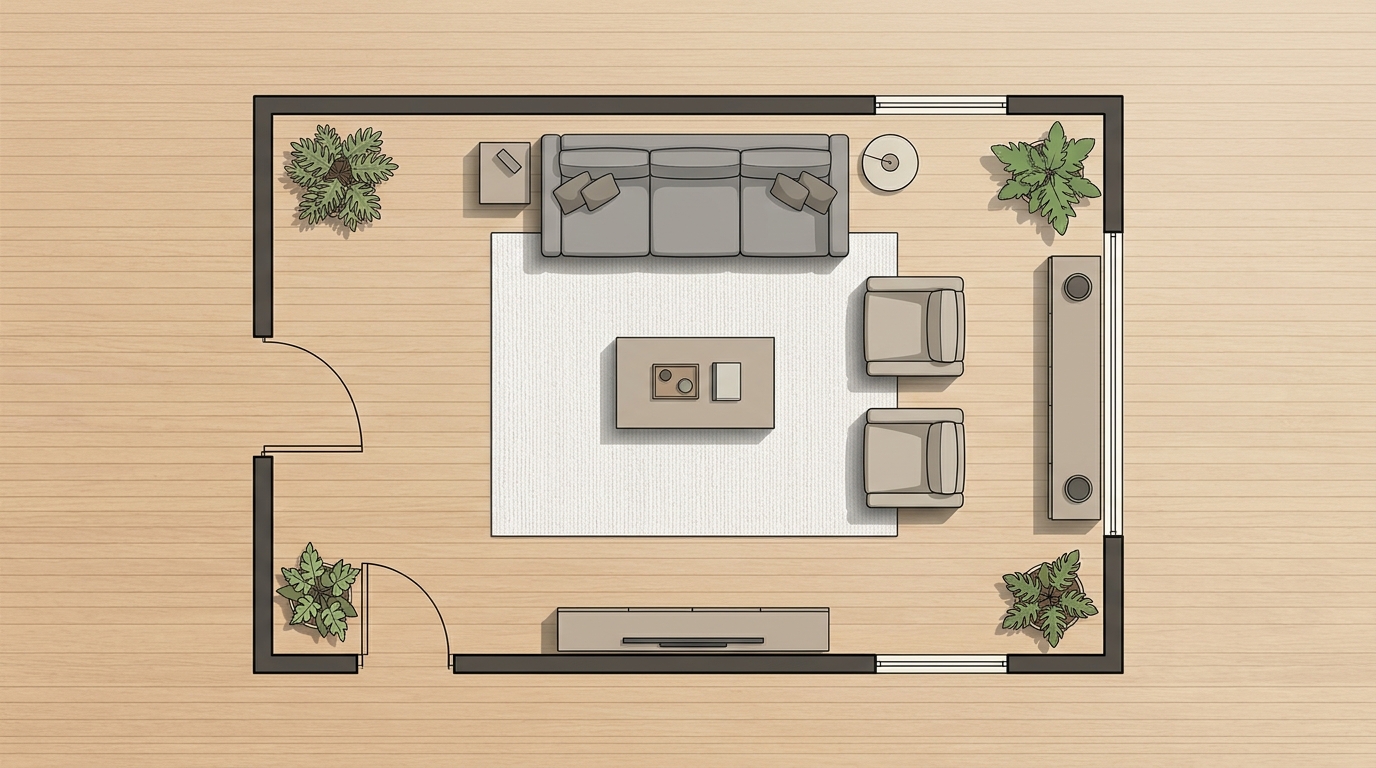
- Living room: in a large room, choose a rug that holds all the seating. In a medium room, put at least the front legs of the sofa and chairs on the rug. A small rug under the coffee table alone often looks lost.
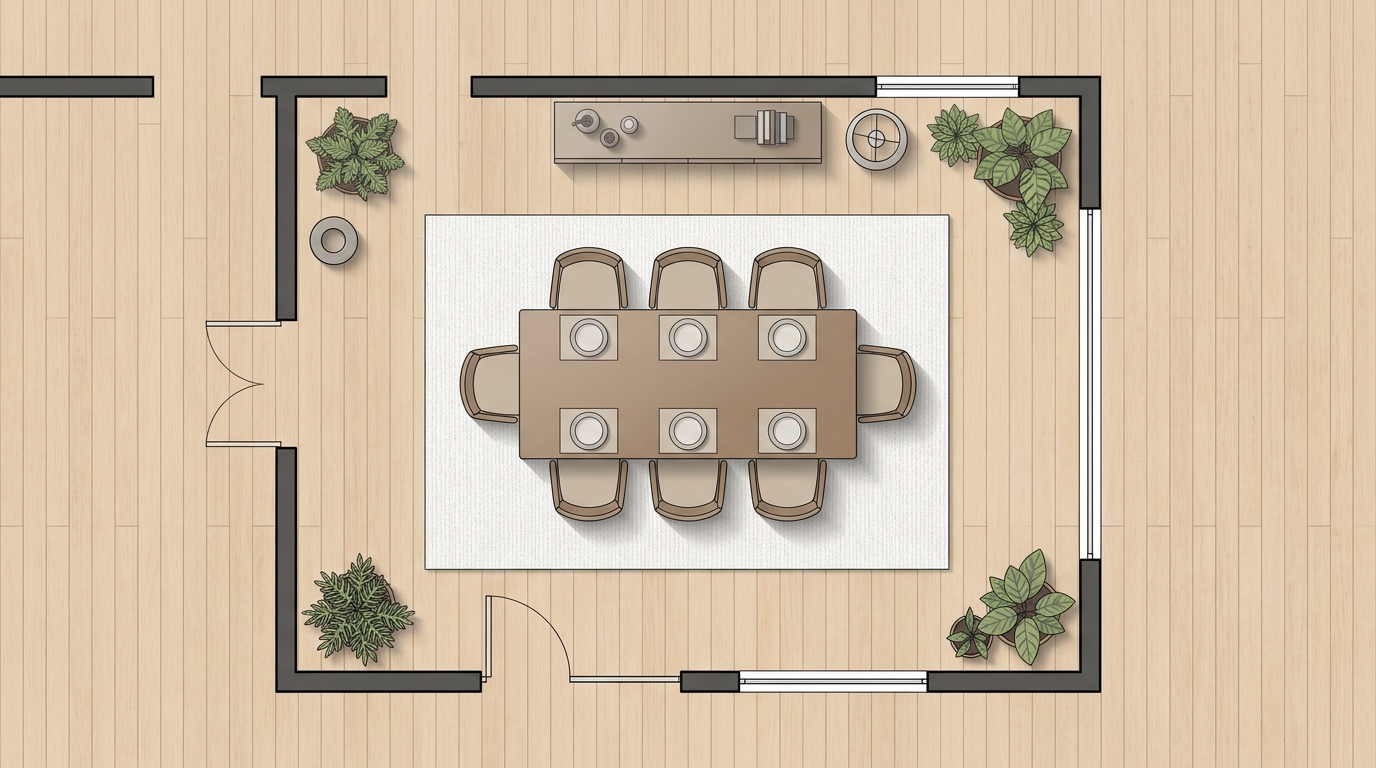
- Dining room: chairs should stay on the rug when pulled out. A simple rule is to add about 60–75 cm to each side of the table.
- Bedroom: lay the rug across the bed so it shows on both sides and at the foot, or use two runners beside the bed.
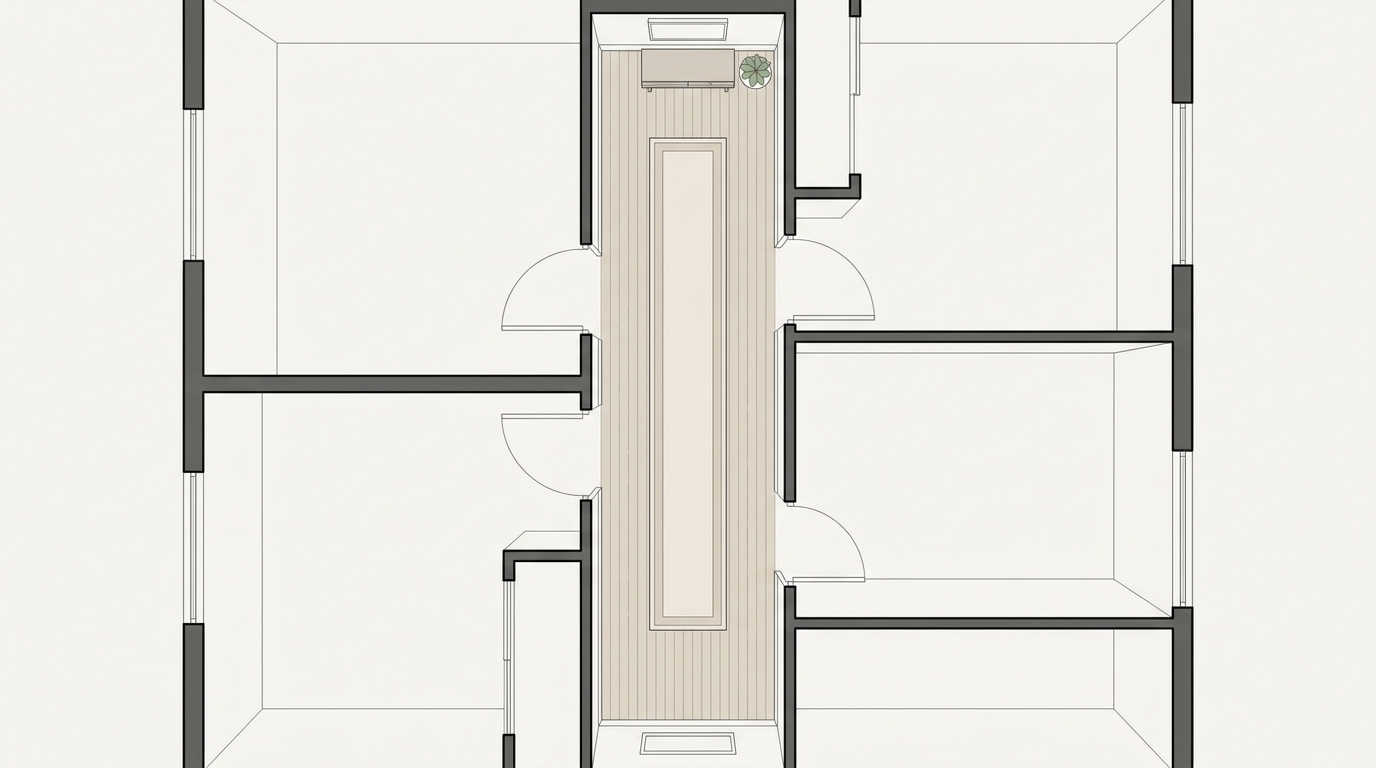
- Hallway: leave some floor visible along both sides and at both ends, and check that doors open freely over the rug.
- Between two sizes: the larger size usually looks better, as long as some floor still shows around the edges.
These points are our practical advice, not fixed rules.
Ordering tips for wholesale buyers
- Order in metres. Even if your shop labels show feet, send enquiries in metric sizes, such as 2 × 3 m or 2.5 × 3.5 m.
- Check sizes per design. A medallion design cannot simply be stretched; each size, especially runners and rounds, needs its own drawing.
- Confirm availability per enquiry. Available sizes change by collection and production run.
Frequently asked questions
Is a 2 × 3 m rug the same as a 6 × 9 ft rug?
No. A 2 × 3 m rug is 6'7" × 9'10", which is about 17 cm wider and 26 cm longer than 6 × 9 ft 2.
Is the fringe included in the size?
Usually not; the stated size is normally the woven body. Ask the seller to confirm.
Why is a 2.5 × 3.5 m rug called a "9-metre" rug?
It is a rounded trade nickname. The exact area is 8.75 m².
What if my room is between two sizes?
The larger size is usually the better choice if some floor remains visible around it.
Sources
- Stone, Peter F. Oriental Rugs: An Illustrated Lexicon of Motifs, Materials, and Origins. Tuttle Publishing, 2013 (entry "dozar"). https://search.worldcat.org/title/828416696
- National Institute of Standards and Technology. Special Publication 811: Guide for the Use of the International System of Units, Appendix B, conversion factors. https://www.nist.gov/pml/special-publication-811